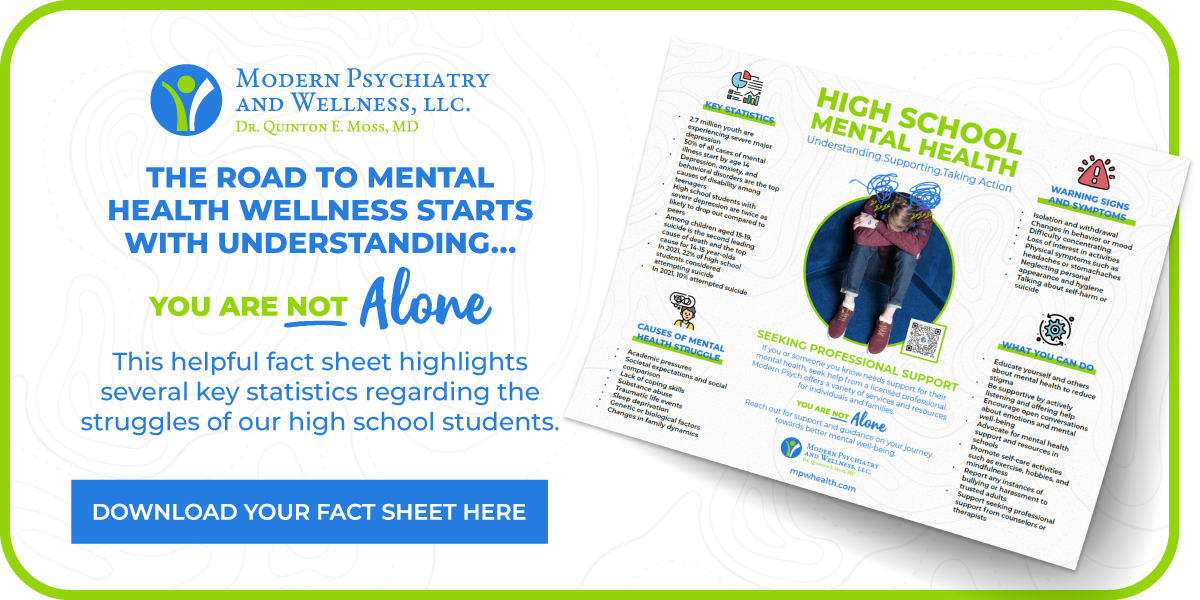

Mental health for teens looks very different today than it did in “The Breakfast Club” era. Loneliness is up, screens are everywhere, and substances are stronger. About 40% of high school students report persistent feelings of sadness or hopelessness. That means almost half of a typical classroom is struggling. The good news: evidence-based care, supportive families, and connected communities can change the trajectory.
of high school students report persistent feelings of sadness or hopelessness.
At Modern Psychiatry and Wellness, we’re here to help families navigate this new landscape with compassion and science.
What’s changed, and why it matters
The developing brain is busy wiring millions of connections that shape attention, mood, memory, and decision-making. When stress, isolation, diet, substances, or sleep problems get in the way, teens are more vulnerable to:
- Depression and anxiety
- Substance use disorders
- Attention, learning, and memory problems
- Psychotic illnesses in at-risk youth
These aren’t character flaws. They’re brain and whole-body health issues, and they’re treatable.
Screens, the teen brain, and risk-taking
The prefrontal cortex (the brain’s decision-maker) matures into the mid-20s. Heavy digital media use can amplify impulsivity and risk-taking and is linked with higher rates of anxiety and depression. Online life can also crowd out sleep, exercise, and in‑person friendships, key protectors of mental health.
Practical steps:
- Create consistent phone‑free zones: at dinner, in bedrooms, and 60 minutes before bed
- Aim for 8–10 hours of sleep; charge devices outside the bedroom
- Encourage weekly face‑to‑face time with friends, clubs, sports, music, or volunteering
- Model balanced tech habits as adults
Food, inflammation, and mood
Ultra‑processed foods can disrupt healthy gut bacteria. That can increase inflammation signals that affect the brain, impacting mood, focus, and energy. Teens who eat more whole foods (fruits, vegetables, lean proteins, legumes, whole grains, and fermented foods) tend to report better well‑being.
Simple swaps:
- Breakfast: yogurt with fruit instead of pastries
- Lunch: turkey/veggie wrap instead of fast food
- Snacks: nuts, hummus, and carrots in place of chips or candy
- Drinks: water or milk instead of sugary beverages
High‑potency THC: why today’s cannabis hits harder
Today’s high‑THC products (vapes, concentrates, edibles) can overstimulate the brain’s system during a critical maturation window. Risks rise with earlier use, higher potency, and frequent use. Potential impacts include:
- Weaker impulse control, poorer memory and learning
- Lower academic performance; possible long‑term IQ loss with heavy, persistent use beginning in adolescence
- Higher anxiety and lower motivation
- Increased risk of psychotic symptoms and psychotic illness in vulnerable individuals
Warning signs to watch:
- Drop in grades or attendance
- Sleep changes, irritability, or paranoia
- Losing interest in activities, withdrawing from family and friends
- Strong odors, vape devices, sudden cash needs
If you’re worried, act early. A calm, nonjudgmental talk and a professional evaluation can prevent bigger problems.
Do things differently: home, church, and community
We can protect youth mental health by changing how we live, support, and advocate.

- Schedule weekly in‑person time: game nights, meals, walks, faith or community events
- Keep routines for sleep, schoolwork, movement, and downtime

- Many families first turn to faith leaders. Equip churches with training to recognize warning signs, refer for care, and support suicide prevention

- Medicaid is the nation’s largest payer for mental health and substance use care; SNAP helps prevent food insecurity, a common cause of poor mental and physical health
- Support policies that strengthen access to care, counseling in schools, and nutrition supports

- Be open and honest about your own experiences with stress, mental health, or substances
- Avoid labels; discuss behaviors and feelings instead
- Set clear, consistent rules about substance use and safety
- Role‑play exit strategies: how to leave a setting where others are using
- Encourage healthy activities that build identity and community
- Explain brain risks in plain language: memory, attention, mood, addiction, and development
Care works: modern treatments that change the brain
Today’s therapies, groups, and medications are more targeted than ever. Structured psychotherapy and skills‑based groups can shift brain activity and strengthen healthy circuits. When medication is appropriate, pharmacogenetic testing can sometimes help guide choices.
Explore our Youth Mental Health services, Substance Use Disorder treatment, Medication Management, and Youth IOP on our website.